


Cost and Schedule Risk Assessment
The scope of a cost schedule risk assessment (CSRA) typically includes identification of risks, prioritization of risks, determining planned risk responses, and quantitatively calculating cost and schedule contingencies based on a targeted confidence levels. IGE CSRA processes for public projects follow U.S. Army Corps of Engineers (USACE) Engineer Regulation (ER) 1110-2-1150, Engineering and Design for Civil Works, ER 1110-2-1302, Civil Works Cost Engineering, and Engineer Technical Letter 1110-2-573, Construction Cost Estimating Guide for Civil Works. In addition, IGE completes CSRA efforts on private projects based on enterprise thresholds and tolerances.

Decision and Technical Analysis
IGE’s cost and model development go well beyond a single line deterministic estimate, utilizing Lumivero’s @risk program and Oracle’s Crystal Ball software to quantify a strategy most appropriate for your project. Our decision/strategy analysis experience includes financial, occupational/safety, natural/environment events, and project execution. Determining a level of confidence for each solution allows a project manager to make an informed decision utilizing the best resources for the job.
Engineering Solutions
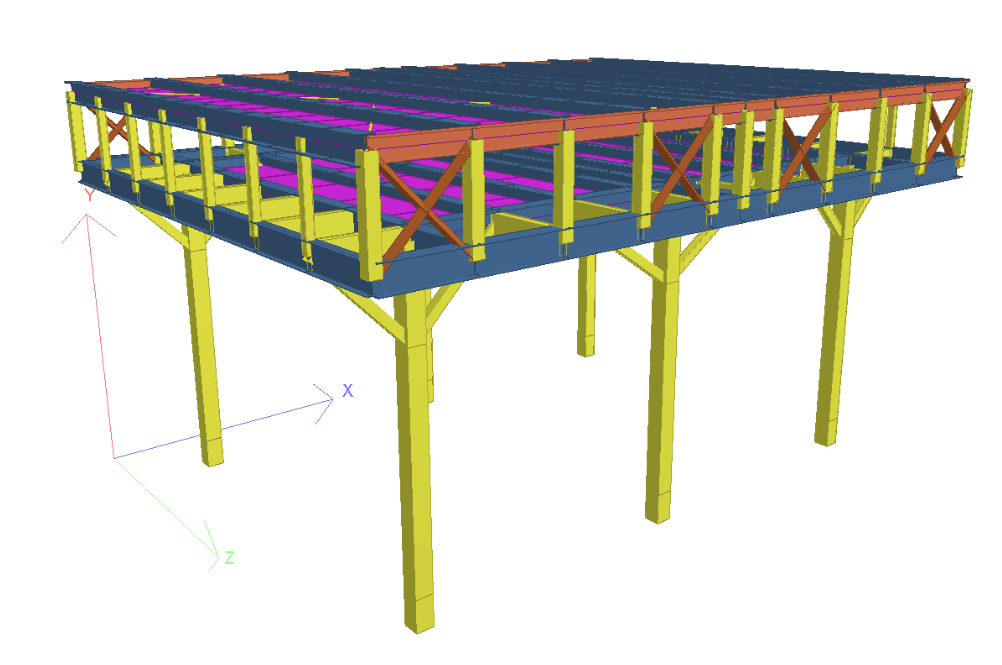
Intellectual Growth Engineering transforms mitigation strategies into executable engineering solutions by integrating quantitative risk science, structural mechanics, and constructability-driven design. We begin by systematically identifying and characterizing threats, hazards, and uncertainties using probabilistic risk assessment methods aligned with federal and defense-sector standards. Mitigation strategies initially defined at a conceptual or operational level are translated into engineering requirements through structured decision analysis and performance-based criteria.
Quantified risk drivers are converted into measurable design objectives using first-principles engineering and validated analytical methods. Abstract mitigation goals—such as reducing blast impulse, limiting progressive collapse, or managing cost and schedule uncertainty—are expressed as load demands, material performance thresholds, and system-level response limits. Advanced tools, including Monte Carlo simulation, nonlinear structural analysis, and scenario-based sensitivity studies, are applied to evaluate alternatives and optimize solutions under uncertainty.
Engineering solutions are developed with execution in mind. Constructability, supply chain availability, lifecycle cost, and phased implementation are treated as governing design variables rather than secondary considerations. This approach ensures that mitigation measures are not only technically sound, but practical to deploy in constrained or austere environments.
By coupling rigorous risk characterization with disciplined engineering synthesis, we close the gap between strategy and implementation, delivering defensible, data-driven solutions that reduce risk while preserving mission performance, cost control, and long-term resilience.

Project Controls
The IGE Project Controls team will focus on five key process elements:
Quality of the input data with supporting technical interpretation
Aligning project control components with the project needs
Selecting an appropriate data analysis system
Creating a communication dashboard with applicable metrics (KPIs)
Establishing a stakeholder communication plan for desired metrics
Core Project Control Components typically considered are:
Cost Estimate and Cost Management
Schedule Development and Schedule Management
Change Management (scope management)
Procurement Management
Risk Management
Project Control Components often considered to fit your project controls are:
Executive Dashboard
Earned Value Management
Document Control
Supplier Performance
Project Baseline Alignment
BIM and information management
Carbon Tracking
Safety Management
Field Management
Unique EPC Project Management Positions
Project Health Position